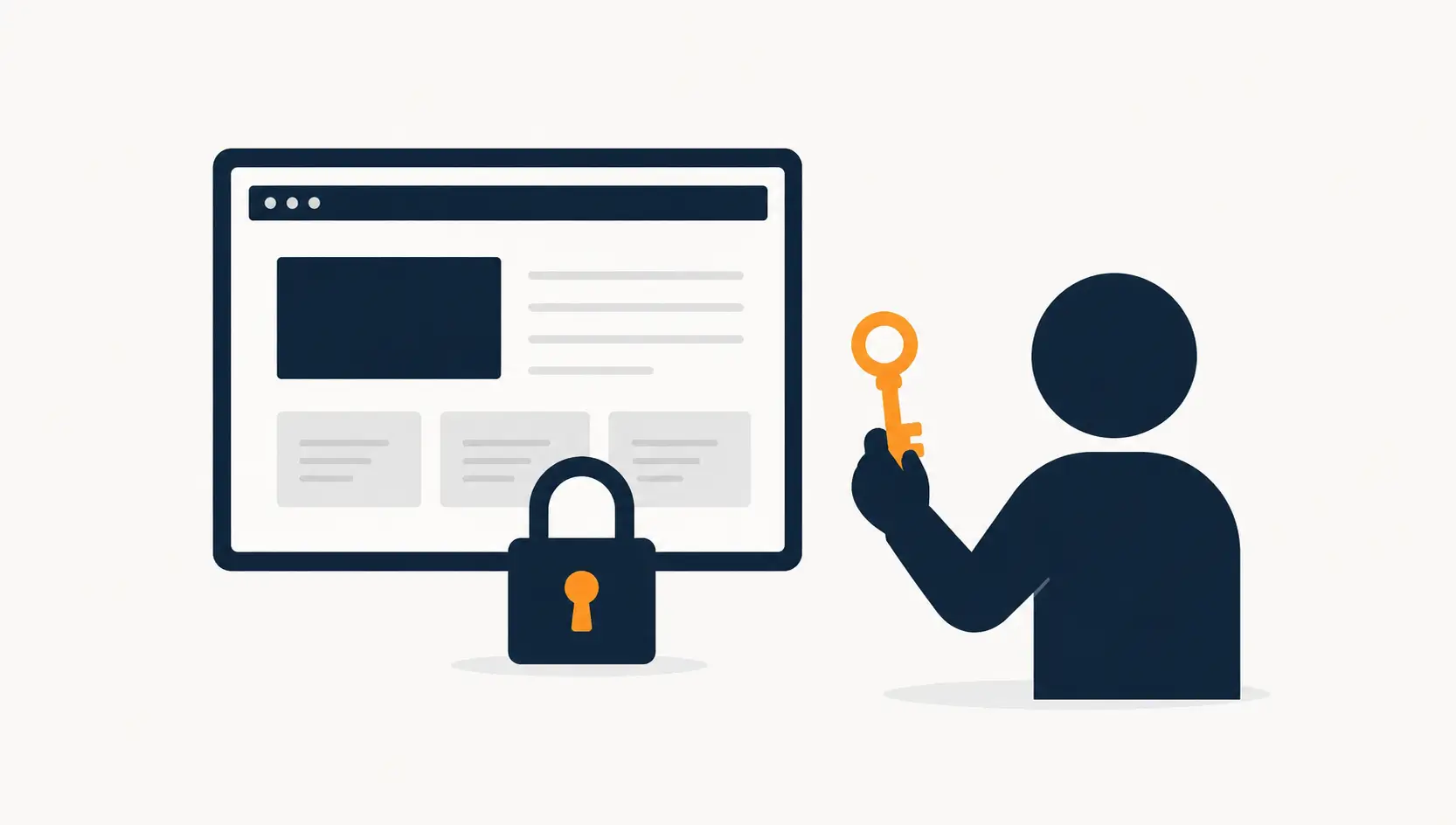
This question rarely gets asked at the right time. Most people only start thinking about it after something has already gone wrong: a developer stops responding, a hosting bill goes unpaid without the site owner knowing, or someone tries to switch web developers and discovers they don’t actually have access to their own website.
If you’re about to build a news portal, a blog, or a business website, this is one of the first decisions you’ll make, and it’s also one of the most important. It sounds like a small technical detail. It isn’t. Who legally owns your domain and hosting account determines who actually controls your website, full stop.
This article walks through exactly what this means, why it matters so much more than it seems at first, and how to get it right from day one.
What “Owning” a Domain Actually Means
When you register a domain name, whether it’s yourdomain.in or yourdomain.com, that registration is tied to a specific account with the domain registrar, along with a name, email address, and payment method. Whoever controls that account controls the domain itself. They can renew it, transfer it, point it to a different website, or let it expire.
Hosting works the same way. Your hosting account, wherever your website’s files and database actually live, is tied to whoever created and owns that account. That person can access your website’s backend, change anything on it, take it down, or move it elsewhere entirely.
Here’s the part that catches people off guard: none of this has anything to do with who designed your website, who wrote your content, or who you’ve been paying every month. It has everything to do with whose name and email address are on the registration.
Why Developers Often Register Things in Their Own Name
This isn’t always done with bad intentions. Sometimes it genuinely is easier for a developer to manage dozens of client sites under accounts they control themselves. Renewals are simpler to track, technical changes are quicker to make, and it can feel like a small convenience that saves the client from dealing with technical settings they might find confusing.
But convenience for the developer and security for the client are two very different things, and they don’t always point in the same direction.
In less well meaning cases, this becomes a form of leverage. If a client wants to switch developers, negotiate pricing, or simply move on, a developer holding the domain and hosting can make that difficult, sometimes deliberately. Suddenly there are new fees to “release” the domain, delays in providing access, or in the worst cases, a complete refusal to hand anything over.
The Real Risks of Not Owning Your Own Domain and Hosting
Even with a developer you trust completely today, here’s what can go wrong down the line:
- You lose the ability to switch developers freely. If you’re unhappy with the work or the pricing later, you’re stuck negotiating from a position of weakness, because they hold the keys to your own website.
- Renewal can lapse without your knowledge. If a developer forgets to renew, moves on to other work, or simply stops running their business, your domain can expire and get picked up by someone else entirely, sometimes within days.
- You can’t sell or transfer your business cleanly. If you ever want to sell your news portal or blog, or hand it to a business partner, a domain registered in someone else’s name complicates that process significantly, sometimes making it impossible without their cooperation.
- Disputes can turn into real leverage against you. If a disagreement over payment or scope of work comes up, a developer holding your domain has significant power in that conversation, whether or not that’s fair.
- You lose your SEO history if forced to move to a new domain. In a worst case scenario where you can’t recover your original domain, you’d have to start a new one from zero, losing every bit of ranking and traffic you built.
None of these situations are rare. They happen often enough that experienced web professionals bring this up as one of the first pieces of advice they give new site owners.
How to Do This the Right Way From the Start
The fix here is straightforward, even if it gets skipped surprisingly often in the rush to get a website live.
- Register the domain yourself, using your own name, your own email address, and your own payment method, even if a developer is helping you pick the name or handling the technical setup.
- Create the hosting account yourself as well, for the same reasons. If a developer needs access to build your site, they can be added as a user on your account rather than owning the account itself.
- Keep every login somewhere safe, including your domain registrar login, hosting panel login, and WordPress admin login. Don’t rely on a developer to be your only record of these details.
- Use an email address you personally control for all these registrations, not a temporary one set up by whoever built your site, since account recovery depends entirely on access to that inbox.
If a developer or agency insists that this isn’t necessary, or seems reluctant to let you hold these accounts yourself, treat that as a signal worth paying attention to, not a small technical preference.
If You Already Have a Website Set Up This Way
If your domain or hosting is currently registered under someone else’s name, this is fixable, but it needs to be handled properly rather than left for later.
- Ask directly for a transfer of the domain to a registrar account in your own name, and the same for hosting where possible.
- Get this in writing, even if it’s just a simple email confirming the handover, so there’s a clear record of the request and the response.
- Do this while the relationship is still good. Transfers are far easier to arrange amicably than they are after a disagreement has already started.
- If a developer refuses or delays unreasonably, that itself tells you a lot about whether this was ever a partnership built on trust in the first place.
What This Says About Choosing Who You Work With
Here’s the part that matters beyond the technical details. How a developer or agency handles this one question tells you almost everything about how they’ll handle the rest of the relationship.
A developer who insists you register your own domain and hosting, who hands over every password without hesitation the moment work is delivered, and who treats your ownership as non negotiable from day one, is showing you they’re building something for you, not something they intend to hold over you later.
On the other hand, reluctance here, vague answers about “why it’s easier this way,” or any resistance to giving you full control of your own accounts, is worth taking seriously as a warning sign, regardless of how good their design work looks.
The Bottom Line
Your domain and hosting are the foundation of everything else you build online. Content, design, rankings, monetization, all of it sits on top of accounts that need to belong to you, and only you, from the very first day.
This isn’t about distrusting every developer you work with. Most are genuinely professional and have no interest in causing problems down the line. It’s about making sure that trust was never actually required in the first place, because ownership was set up correctly from the start. Get this one decision right, and you keep full control of everything you build, no matter what happens with any developer or agency along the way.